Key takeaways · Race brief
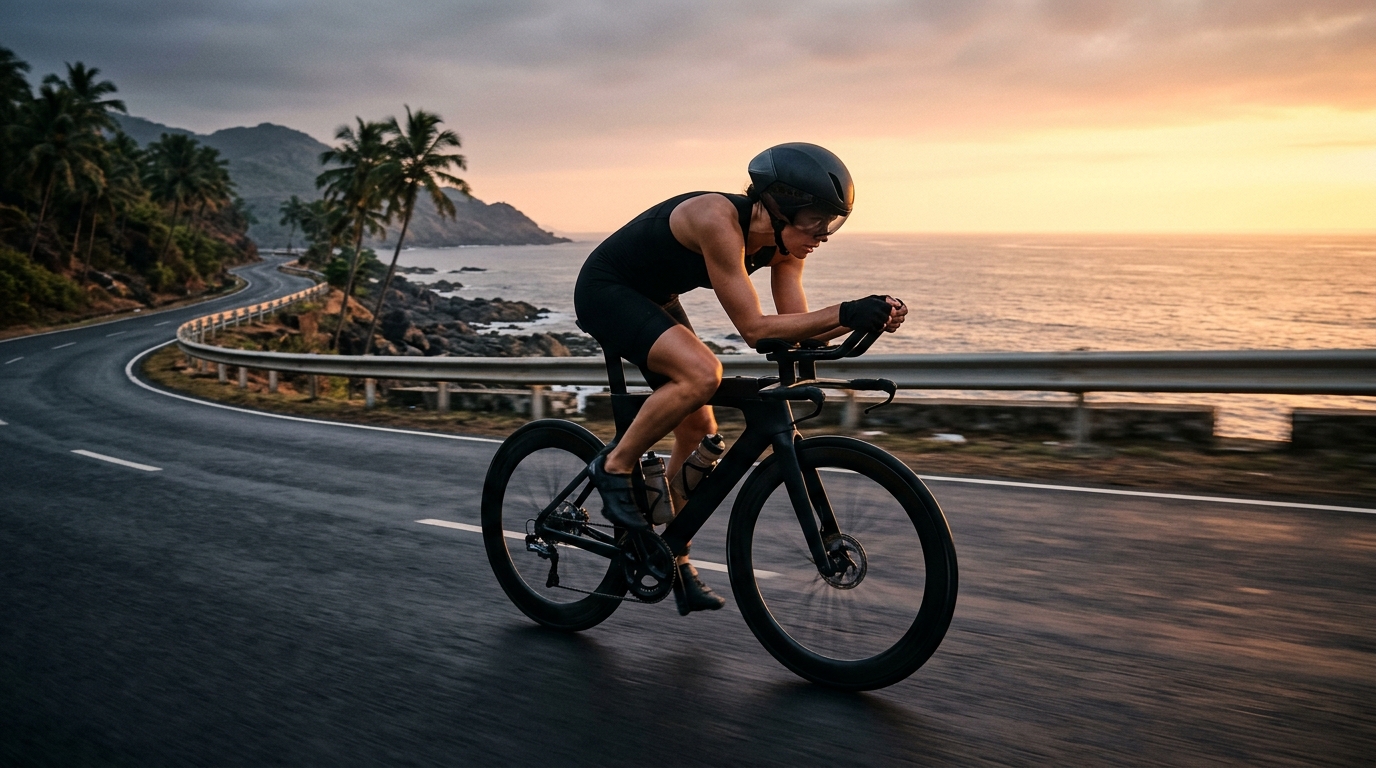
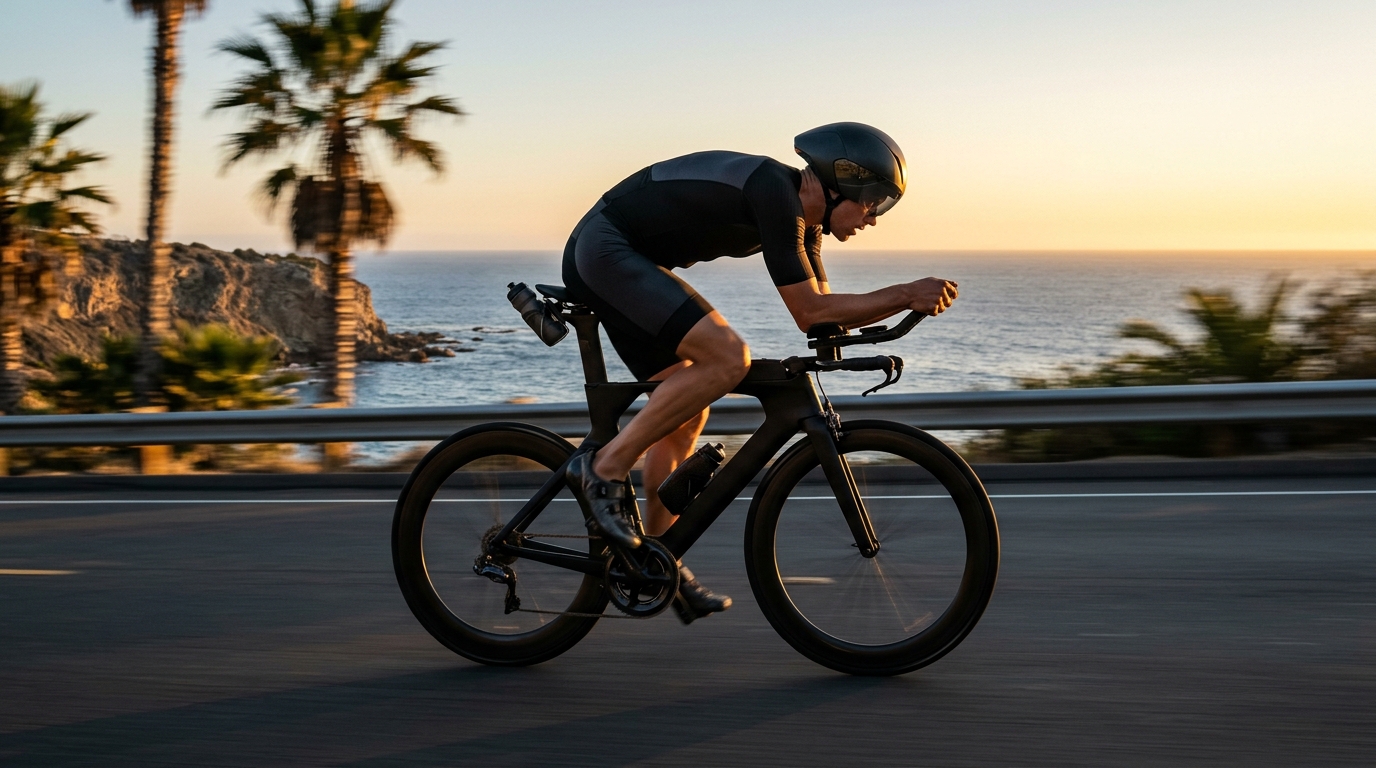
- 1Aerodynamic drag increases with the square of velocity — holding a relaxed, narrow aero tuck saves 30–50 watts over riding upright on the hoods.
- 2The fastest aero position is the one you can stay in for 90%+ of the bike leg without neck pain, numb hands, or restricted breathing.
- 3Build long-course cycling durability with Sweet Spot (88–94% FTP) and Race-Specific Tempo (75–85% FTP) intervals performed IN your aero extensions.
- 4Hide bottles between your aerobars (BTA) and behind your saddle rather than hanging bulky toolboxes or floppy jackets in clean wind.
Why Sustainable Comfort Beats Extreme Pro-Looking Positions
Scroll through race-day photos and you will spot dozens of age-group athletes sitting upright on their basebars by kilometre 45 because their cockpit was slammed aggressively low like a World Tour pro. Sitting up for just 30% of a 90 km ride wipes out every single aerodynamic advantage of a slammed stem — while tightening your hip flexors before the run.
A great triathlon bike fit prioritises three biomechanical pillars: (1) skeletal support through stacked forearms (shoulders relaxed, not shrugged in tension), (2) an open hip angle at the top of the pedal stroke so your diaphragm expands freely, and (3) a split-nose saddle that eliminates soft-tissue numbness.
Where You Put Your Bottles Can Cost — or Save — 12 Watts
Hydration placement is the most overlooked free-speed lever in long-course racing. Round bottles strapped awkwardly to wide seatposts or cluttered handlebars disturb airflow across your torso.
Hydration Placement Aerodynamic & Practical Comparison
| Placement | Aero Impact | Refill Ease on Course | Best Use Case |
|---|---|---|---|
| Between-the-Arms (BTA) straw system | Aero-positive (fills chest gap) | Excellent — refill at aid stations | Primary hydration on Half & Full |
| Single tight behind-saddle carrier | Neutral to slightly aero | Good — carry spare concentrate | High-carb concentrate bottle |
| Downtube aero bottle | Aero-neutral on modern frames | Moderate | Quarter & Half secondary bottle |
| Dual wide wing cages behind saddle | Can add 5–10 W drag if angled wide | Moderate | Avoid unless tightly tucked behind hips |
3 High-Return Cycling Workouts to Raise Your Race-Day Average Speed
Functional Threshold Power (FTP) sets the ceiling for your aerobic engine, but Fatigue Resistance determines how much of that FTP you still possess at hour four. Build both with these three structured sessions:
- Sweet Spot Aero Blocks (60 min): 15 min warm-up → 3 × 12 minutes at 88–92% FTP strictly inside aero bars (4 min easy spin between) → 10 min cool-down. Trains muscular endurance and aero neck stability simultaneously.
- Low-Cadence Torque Builders (65 min): 4 × 8 minutes at 80–84% FTP spinning a deliberate 65–70 RPM seated. Recruits deep glute and quad fibres so rolling climbs feel effortless on race day.
- Race-Effort Fuelling Progression (2.5–3.5 hrs): Ride Zone 2 for the first hour, then lock into 3 × 25 minutes at exact Half/Full race watts (75% or 68% FTP) while drinking 750 ml/hr and eating 70–80 g carbs/hr.
What Is the Ideal Triathlon Cycling Cadence?
For years, athletes were told everyone must spin at 95–100 RPM to save their legs for the run. Modern exercise physiology shows that self-selected cadence between 80 and 90 RPM is metabolically optimal for most endurance athletes. Spinning excessively fast (>95 RPM) spikes cardiovascular heart rate unnecessarily, while grinding below 70 RPM loads quadriceps heavily. Find your smooth rhythm around 83–88 RPM on flats, and spin up to 90–92 RPM only during the final 1.5 km approaching T2.
Frequently asked questions
Cycling & Aero FAQs.
Written by
19+ Multi-Sport & TT RacesAnanya Kulkarni
IBFI Level 3 Bike Fitter · National Time-Trial Podium Finisher
Ananya works with long-course triathletes on aero bike fitting, FTP periodisation, and pacing telemetry so athletes arrive at T2 with fresh running legs.
Endurance training, pacing, and nutrition guidance in the WeRox Journal is for educational purposes and does not replace personalised medical clearance. Consult a qualified sports physician before undertaking long-distance triathlon racing.